
Food Packaging Now
Sorry to mention the big C word again, but ever since COVID-19 has overtaken our year 2020, takeaways have been the main source of food for non-home cooks and even tired home cooks. With that in mind, the amount of packaging used in takeaway, plastic containers, plastic cups, plastic bags. It has increased an unwanted amount of packaging waste in our already very polluted environment. According to a survey by students at NUS (National University of Singapore), in Singapore’s eight week lockdown, a city with 5.7 million residents, an additional 1,470 tons of plastic waste was thrown away from just takeout packaging and food delivery. That is about the weight of 250 elephants!
The Future of Food Packaging?
Even before COVID-19, plastic packaging has been a major problem that people have been trying to tackle in consideration of the future of food and food packaging. Some restaurants try to reduce the use of plastic with reusable containers like SpiceBox London where they’ve started their own Tiffin Club of reusable takeout containers. Others went on to finding more sustainable materials to replace plastic in food packaging, such as Waxpac by Johannes Schmidtner.
Seaweed U
Wenwen Fan’s Seaweed U project is something to consider when we decide what is the future of the food we eat as well as how we eat it. Wenwen aimed to promote seaweed as a sustainable, nutritional food resource through “redesigning food experiences that better incorporate seaweed into different diets”.
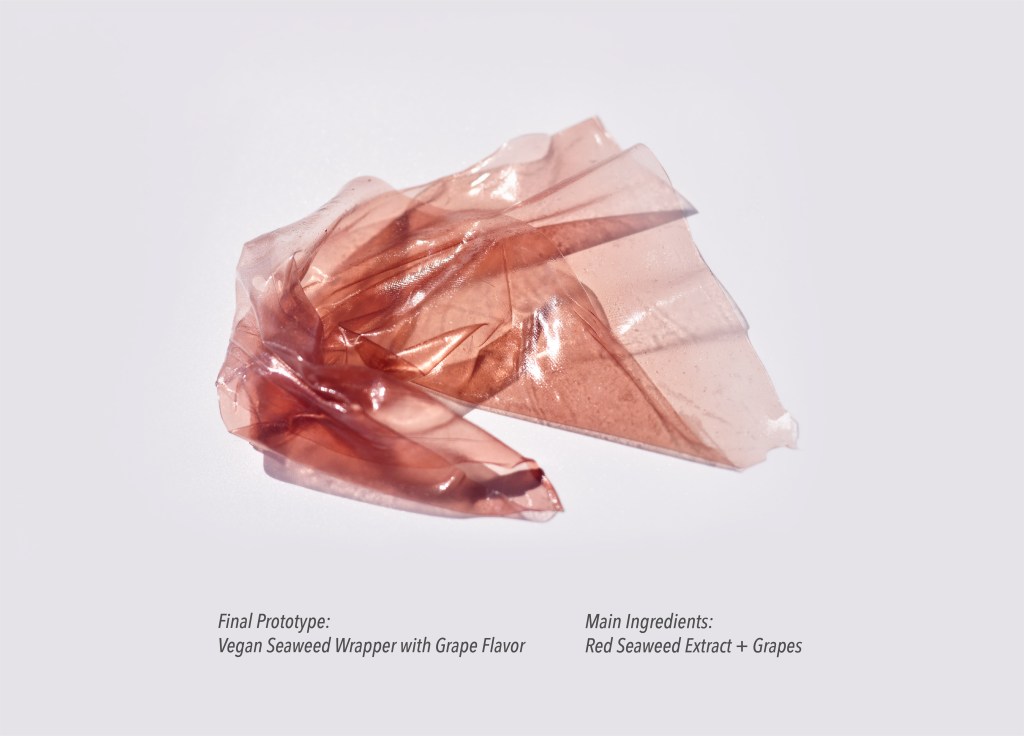
She has found a cultural imbalance between the consumption of seaweed in the East compared to the West. There seems to be an unfamiliarity to seaweed and distaste to the texture of seaweed in Western countries. She aimed to combat this problem by redesigning the way seaweed can be consumed and raise awareness of the environmental benefits and nutritional values of seaweed.
In collaboration with Jakub Radzikowski, a culinary education designer, she has since created innovative food materials from seaweed – vegan seaweed wrappers, and an online platform offering customization for its nutritions and flavors. These wrappers are 100% edible and some made into dissolvable pouches, providing additional nutritional value including polysaccharides from seaweed that may help support gut health. These wrappers come with three suggested scenarios as to how you may use Seaweed U.
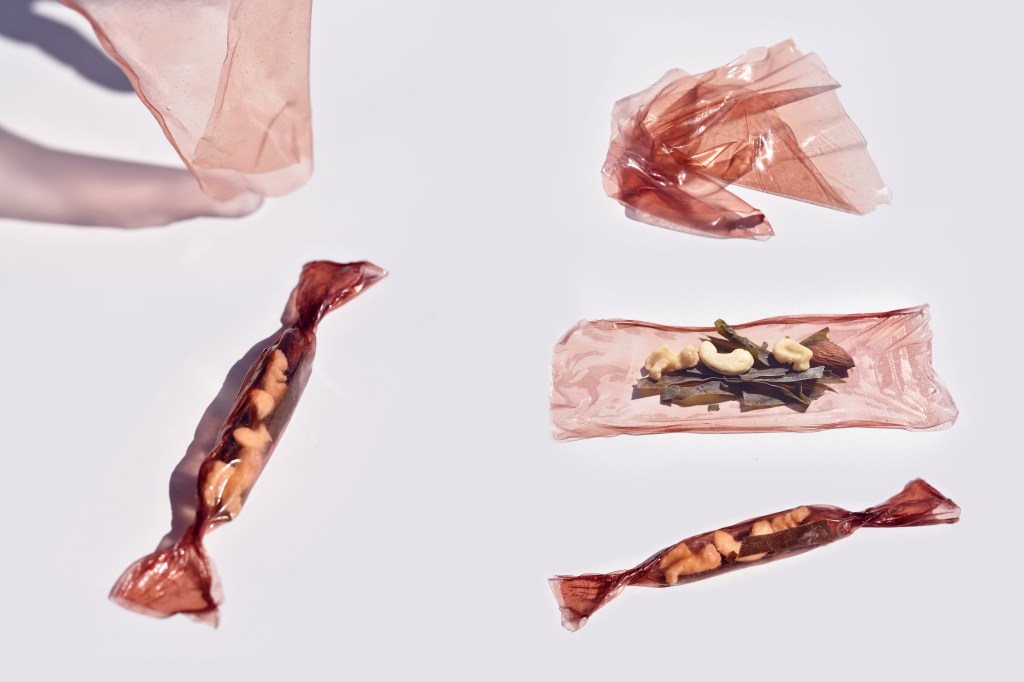
A Snack: Trick or Treat
Through combining a more familiar food palate like nuts and berries with the nutritional skins, it enables people to enjoy seaweed through daily snacking without being held back by the green slimy texture.
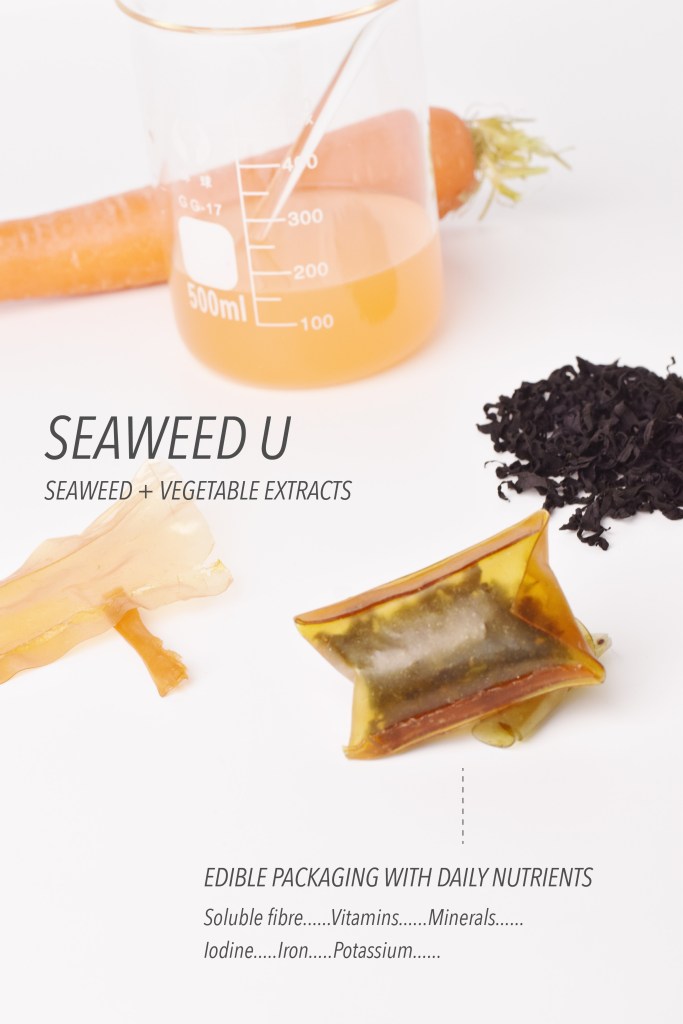
Dissolvable Packaging: The LazyPouch
With a choice of seaweed to choose from: wakame, dulse and kelp etc. This offers a convenient, tasty and quality meal supplement for young professionals living a fast-pace lifestyle.
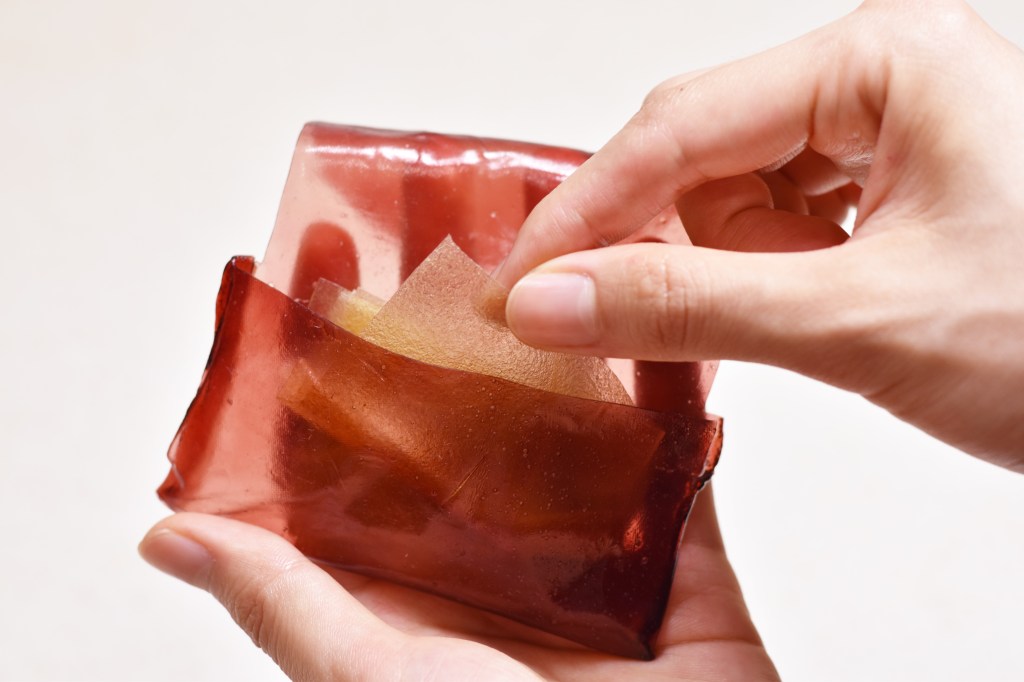
DIY: Super Chef
People can play with this versatile material in combination with ordinary ingredients to make creative dishes such as transparent onigiris, ice cream raviolis and even colourful spring rolls.
Seaweed and Climate Change
Having slightly gone off topic there, eating seaweed can help combat climate change as well. According to scientists, building seaweed farming networks on just 9% of the world’s ocean could offset carbon emission entirely. That is something we should really consider seeing that we have passed Earth overshoot Day this year on August 22. Still way earlier than it should be. How do you see the future of food and food packaging to be like? Let us know in the comments or DM us on social media!
If you’d like to learn more about Seaweed U you can do so here:
Keep up to date with our posts
Subscribe to our Newsletter!
References:
Click to access app001362014.pdf
About Earth Overshoot Day
Information about Seaweed U has been obtained from Wenwen Fan’s website and report that she has disclosed to me to refer when writing this blog.

 Honest Foods