
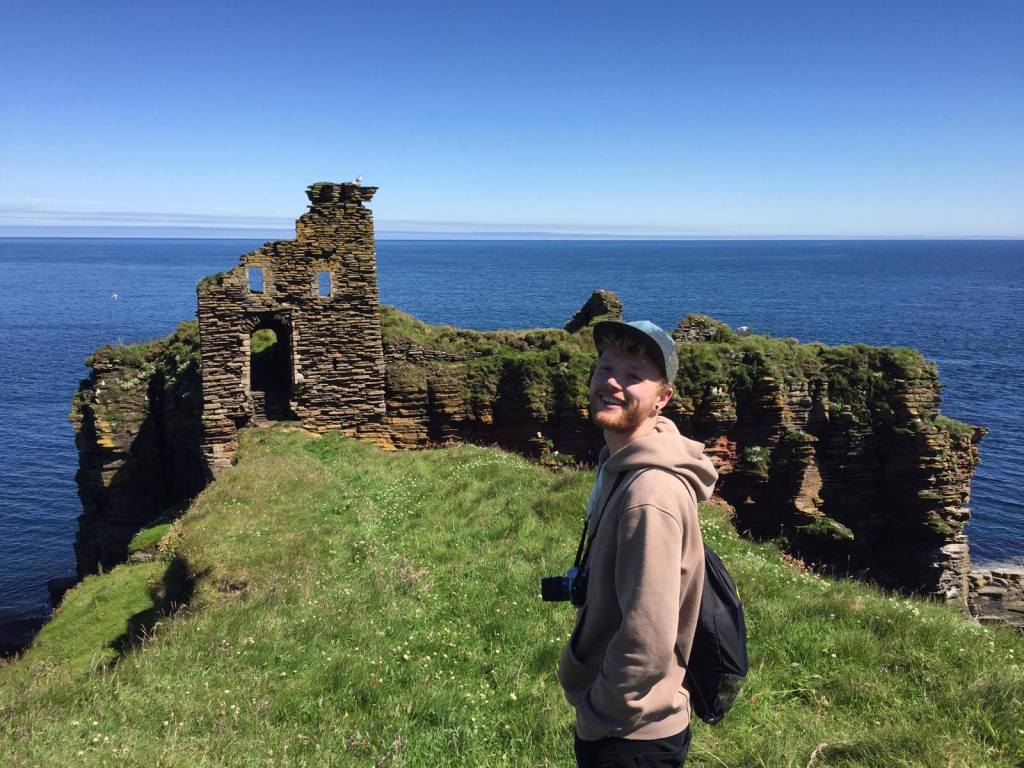
You can find Kristian at:
Kristian Karban is a fresh graduate in Three-dimensional Design whose passion lies in making and creating which explains his deep connection with the natural environment. However, he also developed a strong sense for food from a young age as his parents ran a family bakery and later on a farm. Today, he is trying to live and promote the most responsible way of life, including zero-waste practices, supporting local businesses, buying organic produce and/or reducing plastic consumption. As food is invaluable to our existence, Kristian believes that we should start to cherish, protect and value its quality and significance.
Kristian had responded to an open call I had posted on Daisie, telling me about two projects he has been working on that involved decreasing food waste in his community. One was about a zero waste cafe that he was greatly involved in and the other is an app he has created to help users find out more about their nearest organic/local food sellers. We scheduled a call to talk more about these projects and Kristian so kindly provided some more information based on questions I had asked him. These answers were written in his own words.
Why Food?
What inspires you to be designing for the food sector?
I think my biggest inspiration for designing for the food sector is the overall passion for food and the way I feel about it. Food is something that brings people of various backgrounds together and is a medium through which one can inspire and teach the other. So for me, it is essential to raise awareness about its significance and to improve the overall culture of food, especially today, when there are so many factors that downgrade its quality. People need to recognise this as it can help them sustain good physical and mental health. To put this simply, I would say nature itself and tradition is my biggest inspiration when it comes to food.
Zero Waste Cafe
How did this cafe come about and what was your role during your time at the zero-waste cafe?
The Zero Waste Café began in 2016 as a community project run by the GoGreen group at Robert Gordon University, mainly to raise awareness about food waste but also to educate people and promote healthier and a more responsible way of life. Being located in a community centre, right opposite of one of the RGU’s student halls, it was a truly great place for anybody from around the community, including students to socialise, network, relax and enjoy a free vegan meal. In the first three years, the café operated every Friday evening during each semester. Usually, volunteers prepared and cooked all the food as well as prepared the venue. The food was sourced from a local food organisation C-FINE, which collected food surplus/donations/waste and distributed it further. In the first year, as GoGreen received funding from the Scottish Government, the Café had access to that funding as well. However, after the funding stopped, the Café operated thanks to visitors’ donations and financial support from the RGU Union.
I have taken part ever since its beginning. After the funding was cut, GoGreen transformed into a student-led group and I became the Vice President of the café until my graduation in 2020. Apart from overseeing the project as a VP, I was in charge of collecting the food, organising the weekly events, preparing the meals along with other volunteers and representing the project. The Café continued to run in the same way as before – collecting food from the local food bank, but also further expanded and started collecting surpluses from Tesco’s thanks to the FoodCloud platform developed by FareShare.
Overall, I must say that the Café was in many ways an extraordinary place for anybody to enjoy a Friday evening or to volunteer and socialise. I met many good friends and my partner in the café. It was a place for easing and forgetting about troubles for many.
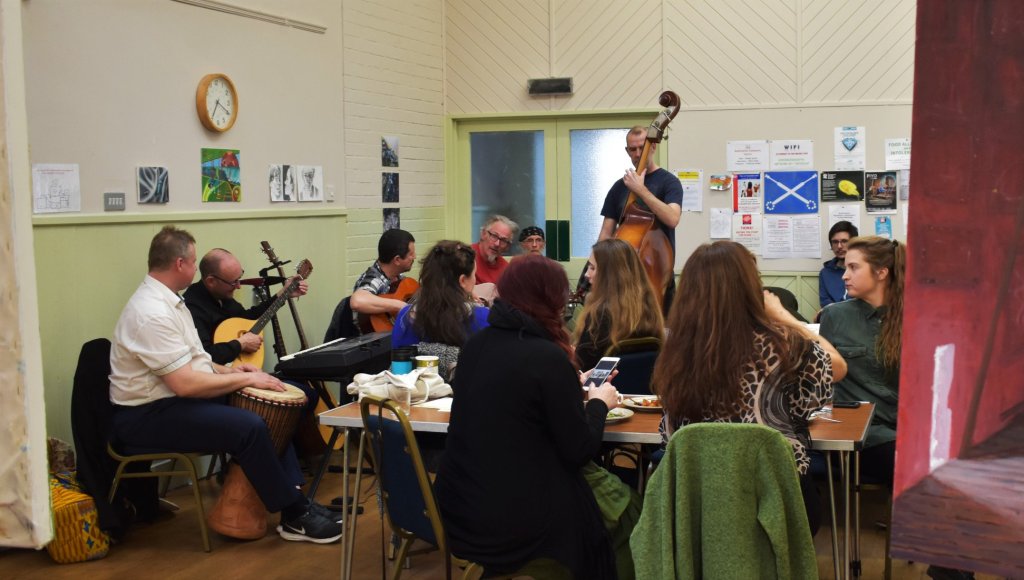
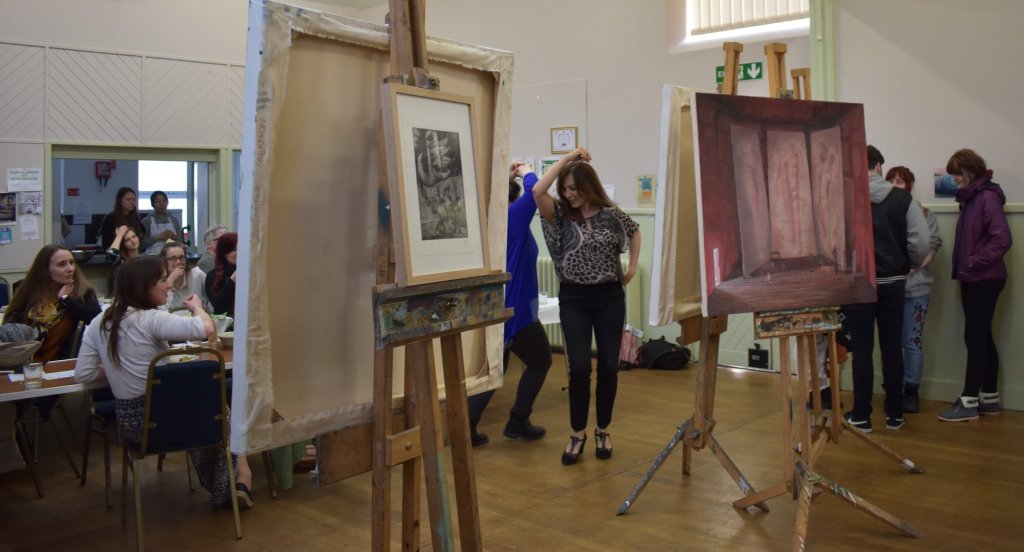
How was the cafe ‘zero waste’ centric? What examples could you give about general day to day practices in the cafe that you considered essential to be zero waste?
The café’s zero-waste practices are based on preparing food from surpluses and on not throwing away any food that was cooked and/or perfectly edible. That means that we really tried to cook such an amount of food that was possible to consume during that one evening. In case of having surplus, which did happen often, the food was offered to anybody, including volunteers, for them to take it home. We always reminded the visitors to bring their lunch boxes or any other containers as we did not give away disposable containers. Nevertheless, we did reuse empty containers or jars obtained from cooking.
The waste produced mainly included food packaging which was always recycled and food waste, such as off-cuts, peels, etc. I am aware that these can be further used, however, as the café operated only once a week in a community centre used by others, it was difficult to keep these or reuse them in any way. Furthermore, to ensure there was enough food to cook from, we used to secure organic vegetables in bulk from a local farm. All of the produce/food was collected using one of the University’s electric vans, thus lowering the carbon footprint. Lastly, provided that the café promoted veganism, the risk of food being thrown away due to turning bad was decreased.
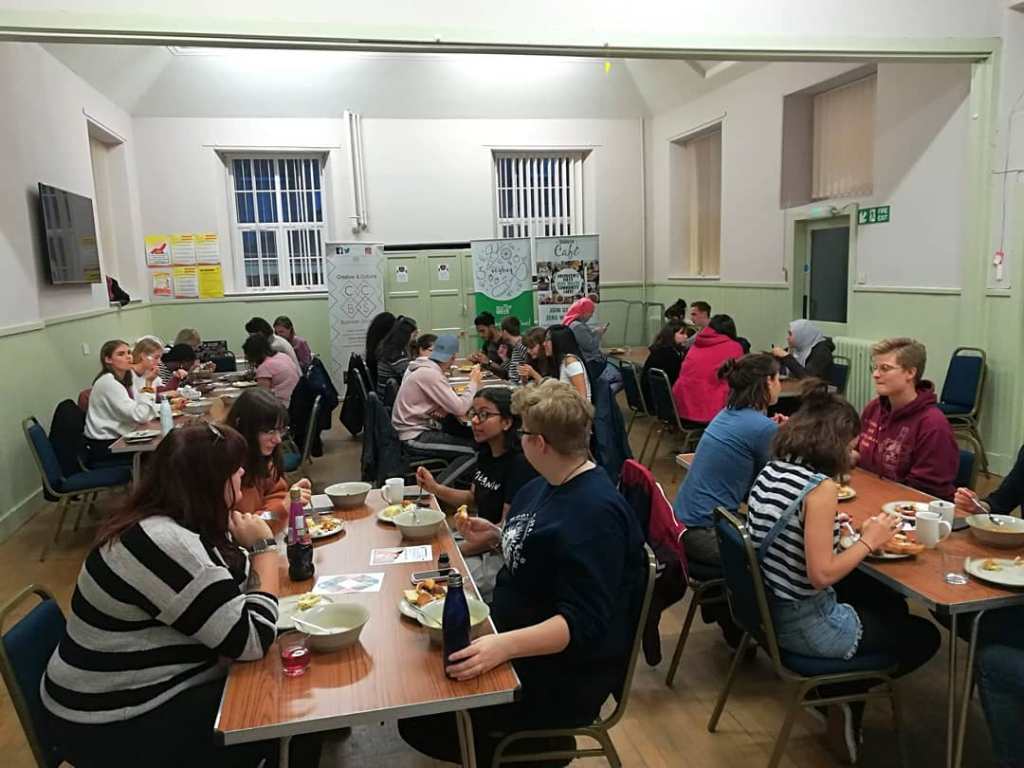
Keep up with RGU Go Green:

 Honest Foods