
Maja Nenadov is a content creative who runs a travel marketing agency. For the past two years she has been travelling on the road and from her experience with this lifestyle, became passionate about living with zero-waste. She is currently writing an ebook about zero waste travelling as a way to inspire more people to start making small changes every day that will ultimately lead to a bigger, positive impact.
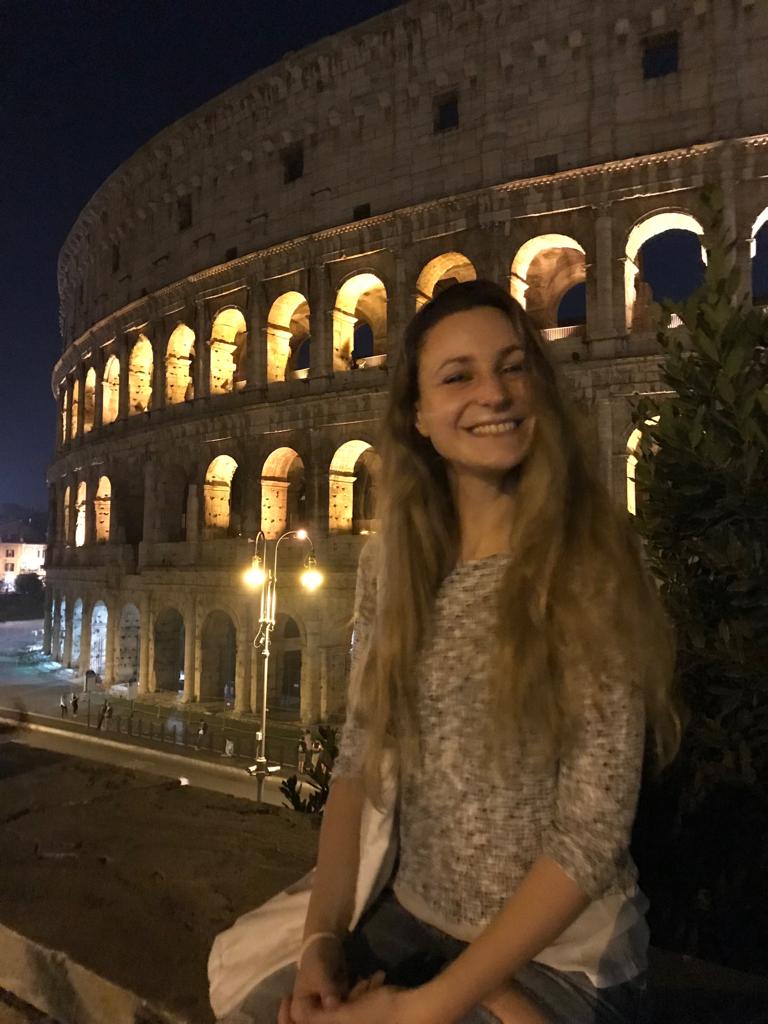
I had posted shoutouts on various creative platforms hoping for innovation to find me. In this case it did. Maja responded to my post on the-Dots where she was keen on collaborating and sharing her story about how she came to be in a zero waste lifestyle. It was an unexpected connection that allowed me to appreciate these random online platforms even more. It was interesting for me to also take a step back and re-evaluate what I plan to share with you on this platform, promoting lifestyles and ideas that we could all learn from, and to help us reduce our food waste.
The Inspiration
Question: What inspired you to create your project and how did you motivate yourself to keep going when things were difficult?
“This all began two years ago as my boyfriend and I decided to travel full time. And through this experience I had seen trash everywhere and seeing how people don’t care, plastic bottles thrown everywhere, was really heartbreaking for me.”
Maja
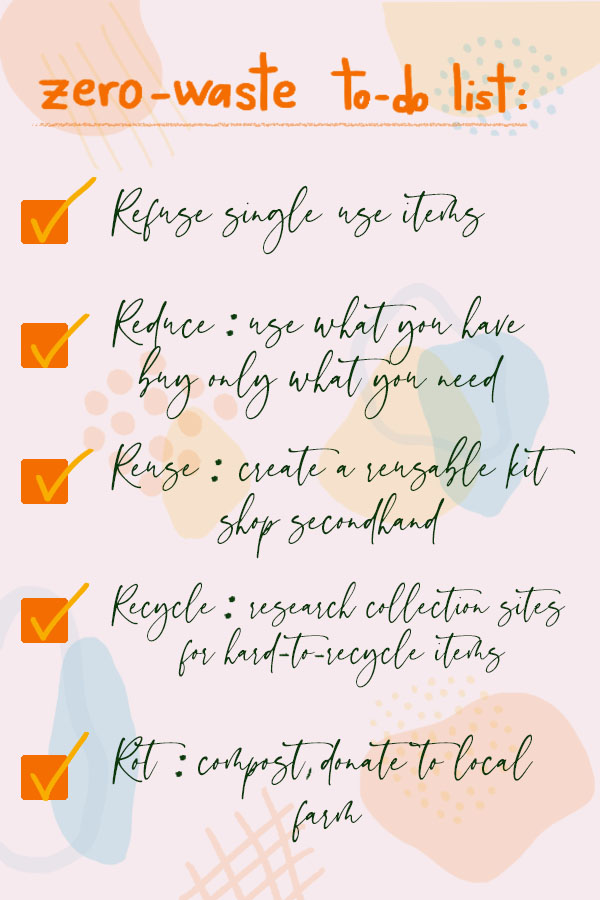
Maja had also gone on to say that although she has chosen the zero waste lifestyle, she is not about forcing everyone to make this drastic change, but asking people to put in the effort for small changes. “If we all put those small changes, eating one meat meal a week instead of 5 for example, we will have a massive change”. Maja is also in the middle of writing an ebook about zero waste traveling that would involve illustrations with guidance and advice based on her experience. She saw this as an opportunity for her to use her skills and to educate people on the problem. Below is an illustration she made that refers to the 5 R’s of a zero waste lifestyle:
The Beginning
Question: What’s it like to live a zero waste lifestyle?
“I started off reading about it a lot, learning about all the mistakes beginners tend to make. A main misconception is thinking that you have to buy a lot of stuff to be zero waste, like all the fancy glass jars and the cloth bags. But the point of the lifestyle is to use what you already have and reusing it. Take an ice cream carton, you can easily use that for a food container. Or a toilet roll to store cables.
Be creative about how to use those objects that you already have! It is not a cheap lifestyle, but that is the point, as you are investing in things that would last longer, and in turn spending less in the long run.
Sometimes especially when I am travelling, it was harder to find zero waste shops, like they would be on the opposite side of the city. But I tend to take that as an opportunity to explore the city! There’s no point to be perfect, so just do as much as you can. After a while, it would change your perspective on how you see stuff, and you would begin asking yourself, do I really need that?”
Maja
Food Waste in a Zero Waste Lifestyle
Question: How do you deal with food waste specifically in this lifestyle? What are the possible avenues for dealing with this problem as an individual?
“I am a huuuugeee foodie! This really bothered me when I was traveling, as there were many places where food waste bins/compost bins were very hidden or harder to find, especially when you’re a tourist!
I have been trying to find ways to deal with this, but I am with some advantage as I am vegan, the food I eat are all very easily compostable. Which is why I started traveling with a metal container, in which I could easily store the waste from the food I eat, and when there is an opportunity, I try to bury it and it would compost naturally!
I do feel bad as I try to be mindful of the waste I produce, especially when I go to all these places. But if you turn it into a positive thing like compost, I feel like there is a need for that.”
Maja
Maja has also given some tips about some of the ways she tries to use all of her food waste as well as ways of reducing. What she suggests reminds me of the saying “another man’s trash is another’s treasure”, in this case she suggests to use rice waste water to water your plants. “Whatever you cook, is full of nutrition and is good for plants!” And another very very important tip, is the beauty of freezing. Maja has also acknowledged how she realised people can be sometimes afraid of freezing things, how the idea that frozen food isn’t as fresh or tasty anymore. But she believes it is a myth, and from my recent experience of watching Anthony Bourdain: Parts Unknown, Japan episode, I believe chef Masa Takayama feels the same way! (Masa freezes the fish he uses for sushi, as it brings out more flavour after the fish has time to season)
Has this helped you think more about living a zero waste lifestyle?
I think this has truly shed more light on a lifestyle that seemed so intense and extreme for me. Having grown up in Malaysia, as most of the Malaysians reading this would relate, we have never really thought twice about the food we waste, and better yet we pride ourselves with the huge variety of good food we offer. I know especially during the festivities, more is better when we are catering to guests, however this causes a huge food waste build up as we are left with more than we can handle. One example of this would be the Ramadhan festival, one that was recently celebrated this year that has been uniquely different due to the lockdown. However last year according to the Solid Waste and Public Cleansing Management Corporation (SWCorp), “about 4,005 tonnes of edible food is thrown away in landfills every day during Ramadan, and the numbers are bound to increase 15 to 20 per cent every festive season.” ( Hassandarvish, 2019)
This amount of food waste could have fed 2.97 million people three times daily, says SWCorp deputy chief executive officer (technical) Mohd Pauze Mohamad Taha. We should really think more about the consequences of food build up, and what we as individuals could contribute to reducing our personal food waste production. I do think that for me personally, I will be more aware of any waste I create, especially these days with the amount of plastic accumulating AGAIN with the COVID pandemic. What are your thoughts about living a zero waste lifestyle? And do you have any other waste reducing tips that you’ve discovered? Share and comment below!
References:

 Honest Foods
1 Comment